
Table of Contents
Pregnancy Stages by Month: A Gentle Guide to Your Maternal Journey
Finding out that you are expecting brings a profound blend of wonder, excitement, and natural anticipation. As your body begins its miraculous transformation, learning about the pregnancy stages by month provides a comforting roadmap for what lies ahead—helping you understand how your baby develops from a tiny cluster of cells into a fully formed newborn.
Across Indian households—whether in vibrant neighborhood communities of Visakhapatnam or close-knit joint families across Andhra Pradesh—pregnancy is celebrated as a sacred milestone.
Yet, as your body changes each week, it is completely normal to have questions about what is happening internally, which check-ups are due, and how to stay healthy.
By understanding fetal milestones and maternal body changes month by month, you can replace uncertainty with confident awareness alongside a dedicated lady gynecologist.

What Does Good Pregnancy Care Involve?
Good pregnancy care combines structured antenatal clinical visits, screening ultrasounds, tailored supplementation (folic acid, iron, calcium), and balanced maternal nutrition. Grounded in FOGSI and WHO guidelines, it ensures continuous fetal growth tracking, early risk detection, and comprehensive emotional and physical support for the mother from conception through delivery.
                  ┌─────────────────────────────────────────┐
                  │    MATERNAL DEVELOPMENT & CARE FRAMEWORK│
                  └────────────────────┬────────────────────┘
                                       │
         ┌─────────────────────────────┼─────────────────────────────┐
         ▼                             ▼                             ▼
┌─────────────────┐           ┌─────────────────┐           ┌─────────────────┐
│ Month-by-Month  │           │ Clinical Scans  │           │ Maternal Wellness│
│ Fetal milestones│ ────────► │ Viability, TIFFA│ ────────► │ Balanced diet,  │
│ & maternal shifts│          │ & growth checks │           │ iron & exercise │
└─────────────────┘           └─────────────────┘           └─────────────────┘
Prevalence of High-Risk Factors in Indian Pregnancies
Understanding maternal health guidelines in India helps ensure a safe pregnancy journey. According to guidelines from the Federation of Obstetric & Gynaecological Societies of India (FOGSI) and national health surveys, approximately 20% to 30% of pregnancies in India fall under the high-risk category, requiring specialized supervision.
Epidemiological data shows that over 52% of pregnant Indian women suffer from iron-deficiency anemia, while gestational diabetes mellitus (GDM) affects 10% to 15% of pregnancies in South India.
Furthermore, conditions like thyroid dysfunction, polycystic ovary syndrome (PCOS), and pregnancy-induced hypertension are increasingly common in urban centers.
Tracking the pregnancy stages by month allows your healthcare team to catch subtle physical changes early, ensuring both mother and baby receive optimal care.
Comprehensive Trimester and Monthly Overview
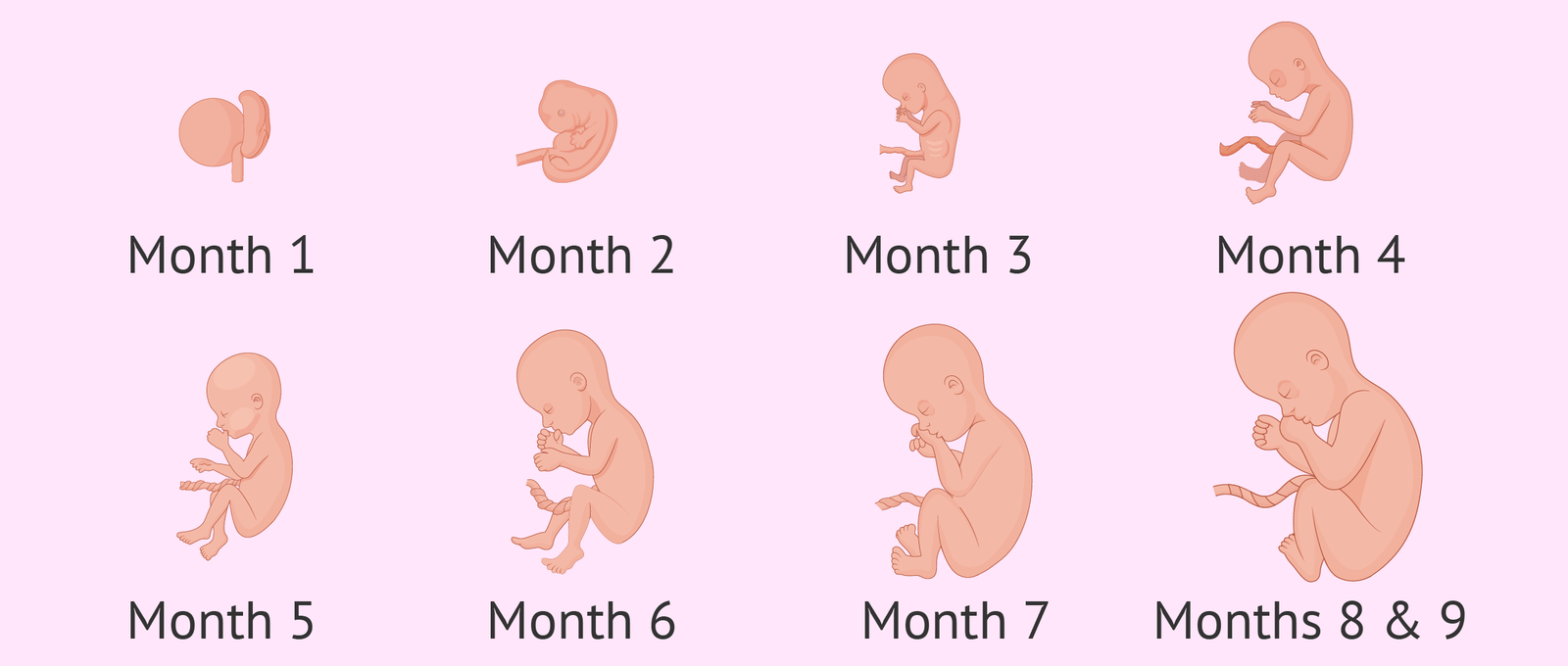
Pregnancy spans approximately 40 weeks (or 9 calendar months), divided into three distinct trimesters. Each month marks key developmental steps for your baby and unique physical adjustments for your body:
┌─────────────────────────────────────────────────────────────────────────────┐
│                   PREGNANCY STAGES BY MONTH AT A GLANCE                     │
├───────────┬──────────────┬──────────────────────────┬───────────────────────┤
│ Month     │ Weeks        │ Baby's Key Milestones    │ Mother's Body Changes │
├───────────┼──────────────┼──────────────────────────┼───────────────────────┤
│ Month 1   │ Weeks 1–4    │ Fertilization, neural    │ Missed period, mild   │
│           │              │ tube formation           │ fatigue, subtle cramps│
├───────────┼──────────────┼──────────────────────────┼───────────────────────┤
│ Month 2   │ Weeks 5–8    │ Heartbeat starts, limb   │ Morning sickness,     │
│           │              │ buds develop             │ breast tenderness     │
├───────────┼──────────────┼──────────────────────────┼───────────────────────┤
│ Month 3   │ Weeks 9–12   │ Major organs formed,     │ Decreasing nausea,    │
│           │              │ reflexes begin           │ slight weight change  │
├───────────┼──────────────┼──────────────────────────┼───────────────────────┤
│ Month 4   │ Weeks 13–16  │ Facial features clear,   │ Energy returns, soft  │
│           │              │ gender characteristics   │ baby bump appears     │
├───────────┼──────────────┼──────────────────────────┼───────────────────────┤
│ Month 5   │ Weeks 17–20  │ Hair & vernix form,      │ First kick movements  │
│           │              │ active movements         │ felt (quickening)     │
├───────────┼──────────────┼──────────────────────────┼───────────────────────┤
│ Month 6   │ Weeks 21–24  │ Taste buds, lung air     │ Backaches, skin       │
│           │              │ sacs develop             │ stretching, appetite  │
├───────────┼──────────────┼──────────────────────────┼───────────────────────┤
│ Month 7   │ Weeks 25–28  │ Eyes open, brain forms   │ Mild acidity, ankle   │
│           │              │ complex neural pathways │ swelling, weight gain │
├───────────┼──────────────┼──────────────────────────┼───────────────────────┤
│ Month 8   │ Weeks 29–32  │ Rapid weight gain, bones │ Shortness of breath,  │
│           │              │ harden except skull      │ Braxton Hicks pressure│
├───────────┼──────────────┼──────────────────────────┼───────────────────────┤
│ Month 9   │ Weeks 33–40  │ Lungs mature, baby drops │ Pelvic pressure,      │
│           │              │ into birth position      │ nest instinct, labor  │
└───────────┴──────────────┴──────────────────────────┴───────────────────────┘
Detailed Journey Through the Pregnancy Stages by Month
First Trimester: Months 1 to 3 (Foundation & Organogenesis)
Month 1 (Weeks 1 to 4): The Quiet Beginning
During the first month, fertilization occurs and the tiny blastocyst implants into the cushioned uterine lining. The neural tube—which later becomes the brain and spinal cord—begins forming. Most women experience very few outward signs, though a missed period and mild implantation spotting may occur.
Month 2 (Weeks 5 to 8): The Heartbeat Awakens
By week 6, a primitive heart begins beating at roughly 100 to 160 beats per minute, visible on an early ultrasound scan. Tiny arm and leg buds emerge alongside forming facial structures. Rising progesterone and hCG levels can cause morning sickness, food aversions, and fatigue.
Month 3 (Weeks 9 to 12): From Embryo to Fetus
By the end of Month 3, your baby is officially called a fetus. All major organs, limbs, fingers, and toes are formed, and the baby begins moving gently inside the amniotic sac. For the mother, nausea often peaks around week 9 before gradually easing toward week 12.
Second Trimester: Months 4 to 6 (Growth & Fluttering Kicks)
Month 4 (Weeks 13 to 16): The Golden Phase Arrives
As hormone levels stabilize, energy returns and morning sickness subsides for most women. Your baby can now swallow, make facial expressions, and respond to light. Your uterus expands outside the pelvis, forming a soft, visible baby bump.
Month 5 (Weeks 17 to 20): The Joy of First Movements
Between weeks 18 and 20, you will likely feel your baby’s first movements—a gentle sensation known as “quickening.” The baby develops a protective white coating called vernix caseosa and fine hair called lanugo. The comprehensive anomaly scan (TIFFA) is performed during this month.
Month 6 (Weeks 21 to 24): Hearing Voices and Growing Strong
Your baby’s hearing is now developed enough to recognize your voice, heartbeats, and external sounds. Lung air sacs begin forming, and real sleep-wake cycles emerge. Mothers may experience mild lower backache as their center of gravity shifts forward.
Third Trimester: Months 7 to 9 (Maturation & Birth Preparation)
Month 7 (Weeks 25 to 28): Opening Eyes and Rapid Growth
Your baby can now open their eyes, sense light changes, and kick with more rhythm and force. The brain develops complex neural connections rapidly. Your doctor will arrange for gestational diabetes screening (OGTT) and check hemoglobin levels around this time.
Month 8 (Weeks 29 to 32): Packing on Fat and Strengthening Bones
The baby gains weight rapidly, adding layers of protective fat under the skin. All bones harden, except for the skull plates which remain soft and flexible for birth. Mothers may experience breathlessness as the enlarged uterus pushes gently against the diaphragm.
Month 9 (Weeks 33 to 40): Final Preparation and Delivery
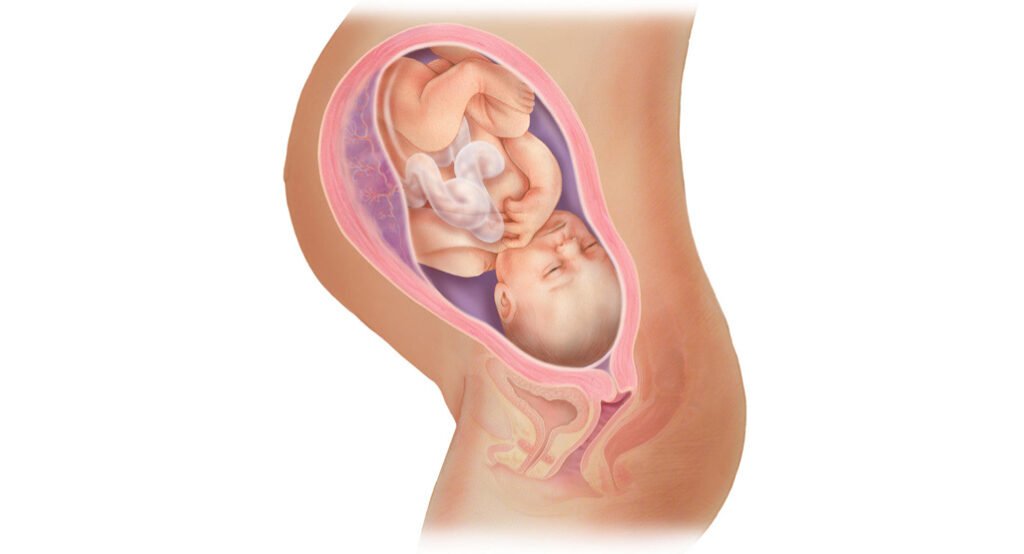
In the final month, the baby’s lungs reach full maturity. The baby typically rotates into a head-down position (cephalic presentation) and settles deeper into the pelvis. Nesting instincts peak, and your body prepares for labor with mild practice contractions (Braxton Hicks).
┌─────────────────────────────────────────────────────────────────────────────┐
│             RECOMMENDED CLINICAL ULTRASOUND TIMELINE IN INDIA               │
├──────────────────┬───────────────────────────┬──────────────────────────────┤
│ Scan Type        │ Ideal Timing              │ Primary Clinical Goal        │
├──────────────────┼───────────────────────────┼──────────────────────────────┤
│ Viability Scan   │ Weeks 6 to 8              │ Confirm intrauterine pregnancy│
│                  │                           │ and fetal cardiac activity   │
├──────────────────┼───────────────────────────┼──────────────────────────────┤
│ NT / First Scan  │ Weeks 11 to 13            │ Chromosomal screening &      │
│                  │                           │ precise gestational dating   │
├──────────────────┼───────────────────────────┼──────────────────────────────┤
│ Anomaly Scan     │ Weeks 18 to 22            │ Detailed structural evaluation│
│ (TIFFA)          │                           │ of all internal organs       │
├──────────────────┼───────────────────────────┼──────────────────────────────┤
│ Growth & Doppler │ Weeks 28 to 34            │ Assess fetal weight, amniotic│
│ Scan             │                           │ fluid, and placental blood   │
└──────────────────┴───────────────────────────┴──────────────────────────────┘
Standard FOGSI & WHO Antenatal Check-up Schedule
Following a structured clinical visit schedule ensures every stage of your pregnancy is monitored safely:
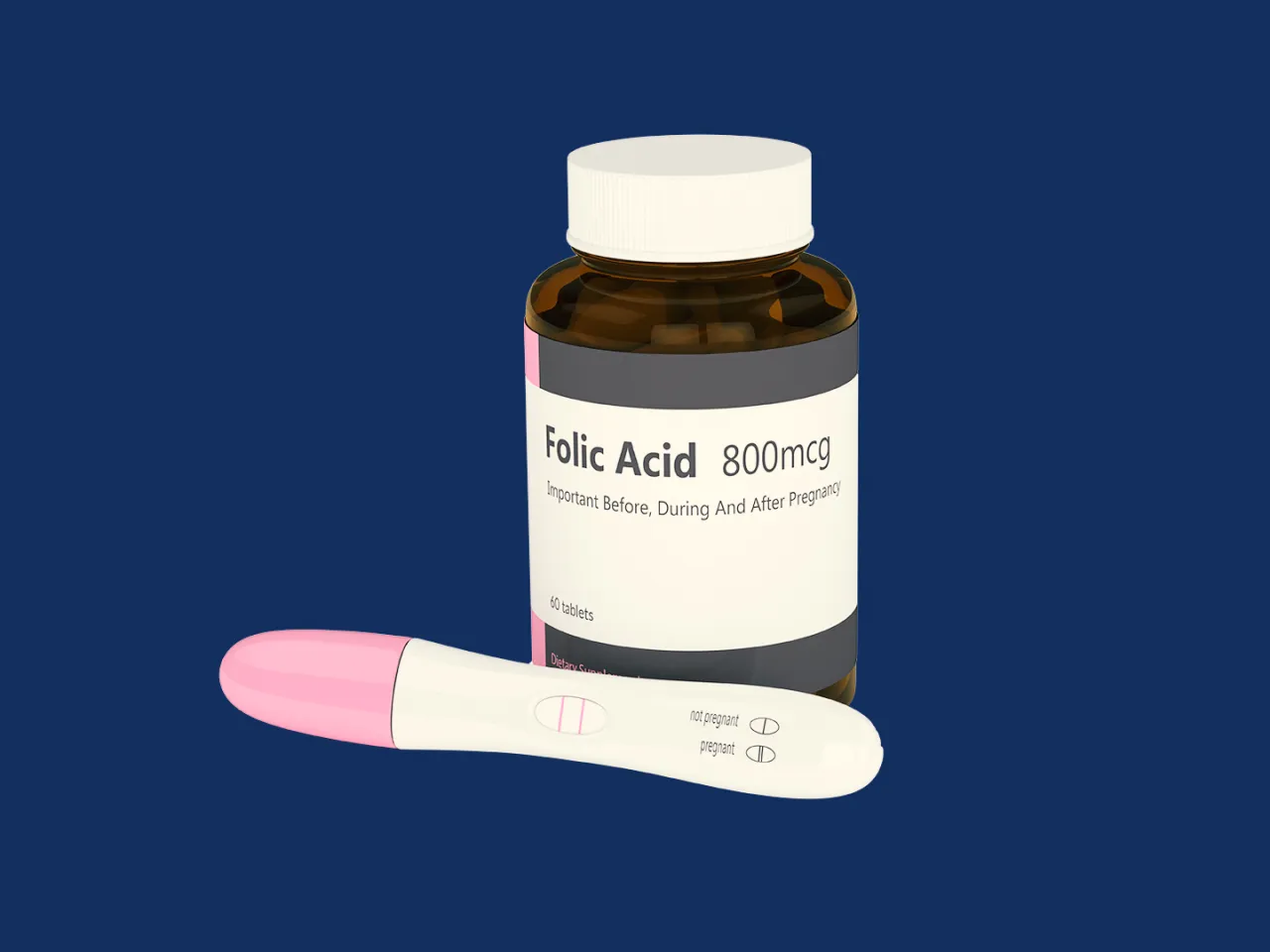
- First Consultation (Weeks 6 to 8): Confirm pregnancy via ultrasound, record baseline blood pressure and weight, evaluate hemoglobin, and prescribe daily folic acid.
- First Trimester Screening (Weeks 11 to 13): Perform the Nuchal Translucency (NT) scan alongside blood markers to evaluate fetal chromosomal health.
- Monthly Second Trimester Checks (Weeks 14 to 28): Track fetal growth, review the detailed anomaly scan (TIFFA scan at weeks 18-22), and conduct the Glucose Tolerance Test (OGTT) around week 24.
- Bi-Weekly Visits (Weeks 28 to 36): Monitor blood pressure, check for ankle edema, perform growth scans, and review routine iron and calcium supplementation.
- Weekly Final Visits (Weeks 36 to Delivery): Check fetal presentation, monitor heart rate, evaluate cervical readiness, and finalize birth preferences.
Warning Signs to Never Ignore During Pregnancy
While most pregnancy body changes are completely healthy and expected, certain physical warning signs require immediate medical consultation. Always contact your healthcare provider if you experience:
- Any vaginal bleeding, dark spotting, or sudden watery discharge.
- Severe, unyielding lower abdominal pain or persistent back cramps.
- High fever, severe chills, or painful, burning sensations while urinating.
- Sudden, pronounced swelling in your face, hands, or ankles combined with a severe headache or blurred vision.
- A clear reduction in your baby’s daily movements or kick counts in the third trimester.
If you observe any of these symptoms, consulting an experienced pregnancy doctor Visakhapatnam ensures prompt clinical evaluation and complete peace of mind.
Understanding High-Risk Pregnancy Management
A high-risk pregnancy classification simply means that specialized care, closer monitoring, or additional diagnostic tests are recommended to keep mother and baby safe.
Common high-risk factors include maternal age over 35, pre-existing conditions like hypertension or thyroid disorders, carrying twins, a history of recurrent pregnancy loss, or developing gestational diabetes.
Receiving a high-risk diagnosis does not mean complications are guaranteed—it simply highlights the value of having an attentive specialist by your side.
Dr. Devani Chalamuri, a highly regarded obstetrician in Vizag, specializes in high-risk pregnancy care, fetal growth monitoring, and maternal health management at Vedanta Speciality Clinics in Madhurawada.
Her thoughtful approach ensures mothers with complex health needs receive expert, coordinated clinical care every month.
Practical Hospital Bag Checklist for Delivery
Preparing your delivery bag around week 35 helps eliminate last-minute worry as your due date approaches:
- Maternal Medical Documents: Government photo ID, health insurance cards, and your complete file of antenatal records, blood reports, and ultrasound scans.
- Maternal Clothing & Essentials: 3-4 front-open cotton nightwear or feeding kurtis, high-waist cotton underwear, maternity sanitary pads, lip balm, basic toiletries, and soft footwear.
- Newborn Needs: 4-5 sets of washed, soft cotton newborn clothes (jablas), cloth nappies or newborn diapers, 2 swaddling sheets, a light baby blanket, and gentle wipes.
- Birth Partner Essentials: Phone chargers, power banks, comfortable spare clothing, basic snacks, a water bottle, and cash/digital payment options.
Nurturing Your Body During Postnatal Recovery
Maternal wellness extends into the weeks following delivery. The “fourth trimester”—the first six weeks post-birth—is a crucial healing period for every new mother:
- Postnatal Recovery & Physical Healing: Your body needs rest while the uterus contracts back to its original size (involution) and perineal tissues or C-section incisions heal. Gentle walking and guidance on pelvic floor recovery help restore physical strength.
- Lactation & Newborn Bonding: Establishing breastfeeding requires patience. A supportive women’s health specialist offers guidance on proper latching, nipple care, and adequate hydration to build a healthy milk supply.
- Emotional Health & “Baby Blues”: Hormonal shifts after delivery can trigger temporary mood swings, tearfulness, or anxiety in up to 80% of new mothers. Compassionate family support, adequate sleep, and open communication make a significant difference.
Frequently Asked Questions
How early should I start prenatal care in Visakhapatnam?
You should schedule your first appointment as soon as you miss a period or confirm a positive home test, ideally between weeks 6 and 8. Early consultations establish baseline maternal health, confirm fetal viability, and initiate essential folic acid supplementation.
When will I feel my baby move for the first time during pregnancy?
First-time mothers usually feel initial fetal movements—known as quickening—between Month 4 and Month 5 (weeks 18 to 22). If you have been pregnant before, you may notice these gentle flutters slightly earlier, around week 16.
Which doctor should I see for high-risk pregnancy in Vizag?
For pregnancies complicated by thyroid dysfunction, gestational diabetes, or hypertension, consult an experienced obstetrician in Vizag such as Dr. Devani Chalamuri at Vedanta Speciality Clinics in Madhurawada.
Can I get routine pregnancy ultrasounds in Madhurawada?
Yes, complete antenatal check-ups and referrals for necessary fetal scans—including viability, anomaly (TIFFA), and growth scans—are fully managed at Vedanta Speciality Clinics in Madhurawada.
Is morning sickness normal in Month 2 and Month 3?
Yes, nausea and vomiting are very common during the first trimester due to rapidly rising hCG and progesterone levels. These symptoms usually peak around week 9 and subside by the start of the second trimester.
How often will I need to see my obstetrician in Vizag during the third trimester?
In a routine pregnancy, visits occur every two weeks from week 28 to 36, and weekly from week 36 until delivery. High-risk conditions may require more frequent clinical monitoring.
What is the cost of a gynaecologist consultation in Visakhapatnam?
Consultation fees in Visakhapatnam typically range between ₹400 and ₹800 depending on the specialist’s experience and clinic setup. Contact Vedanta Speciality Clinics in Madhurawada directly for specific pricing details.
What is the difference between gestational age and fetal age?
Gestational age is calculated from the first day of your last menstrual period (LMP), while fetal age starts from the actual time of conception (usually 2 weeks later). Doctors use gestational age for all standard clinical tracking.
Walk Through Every Stage with Confident Care
Understanding the pregnancy stages by month empowers you to embrace every physical change and developmental milestone with joy, clarity, and peace of mind.
Ready to start your pregnancy journey in Vizag with expert care? Book your first appointment with Dr. Devani Chalamuri at Vedanta Speciality Clinics, Madhurawada — WhatsApp: +91 81257 65888 or visit Vedanta Speciality Clinics.


Leave a Comment