
Table of Contents
How Do Females Get Breast Cancer? Causes, Risk Factors, and Protection
Understanding how do females get breast cancer starts with knowing that it is not caused by a single event, injury, or mistake. Breast cancer develops when normal breast cells undergo genetic mutations that cause them to grow and divide uncontrollably, forming a lump or tissue mass.
These cellular changes are typically triggered by a complex combination of genetic predisposition, hormonal exposure throughout a woman’s life, age, and environmental factors. While you cannot control inherited risks or aging, understanding how these mechanisms work empowers you to take proactive steps through early screening, healthy lifestyle habits, and timely medical care.
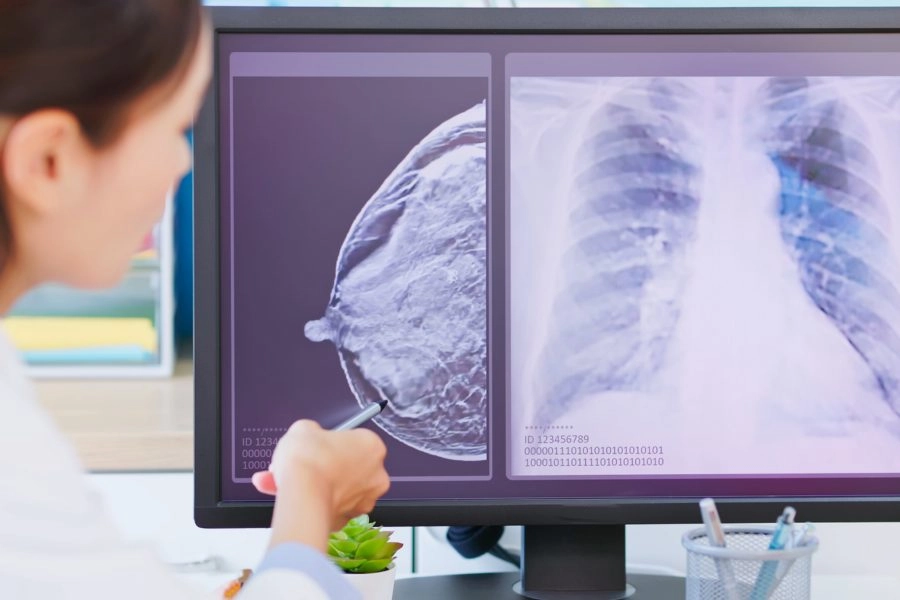
Defining Breast Cancer:
To understand how breast cancer originates, it is helpful to look at the basic biology of the breast.
Breast Cancer Definition: Breast cancer is a medical condition characterized by the abnormal, uncontrolled growth of cells originating in the breast tissue—most commonly within the milk ducts (ductal carcinoma) or the milk-producing glands called lobules (lobular carcinoma). Over time, these mutated cells can form tumors, invade surrounding healthy tissue, or spread to other parts of the body through the lymphatic system or bloodstream.
For women across Andhra Pradesh, including growing urban hubs like Visakhapatnam and Madhurawada, taking time to understand your personal health profile is one of the most effective ways to protect your long-term wellness.
Causes: What Triggers Cellular Changes in the Breast?
At its core, breast cancer is caused by damage to the DNA inside breast cells. DNA contains the instructions that tell cells when to grow, divide, and die. When DNA becomes mutated, cells can lose their normal boundaries and continue multiplying indefinitely.
- Inherited Genetic Mutations: About 5% to 10% of breast cancers are hereditary, passed down through generations. The most well-known gene mutations occur in BRCA1 and BRCA2. Normally, these genes repair broken DNA; when mutated, their ability to prevent abnormal cell growth is drastically reduced.
- Acquired Genetic Mutations: Most breast cancers (90% or more) are non-hereditary or “sporadic.” These DNA mutations develop over a lifetime due to the natural aging process, cellular replication errors, or exposure to environmental factors.
- Hormonal Stimulation: Estrogen and progesterone are essential female reproductive hormones that stimulate breast tissue growth. Prolonged, uninterrupted exposure to higher levels of estrogen can increase cellular division rates, raising the statistical likelihood of replication errors.
- Chronic Cellular Stress: Long-term oxidative stress, systemic inflammation, and metabolic imbalances can damage cellular structures over time, making DNA repair less efficient.
Symptoms: Early Signs to Notice
Breast cancer often develops silently in its earliest stages, which is why routine screening is so vital. However, as tissue changes progress, physical signs may appear.
Knowing what is normal for your body makes it much easier to spot unexpected changes early:
- A Distinct Lump or Thickening: A firm, painless mass or thickened area in the breast or underarm (axilla) that feels noticeably different from the surrounding tissue.
- Contour or Size Alterations: Unexplained swelling, shrinkage, or asymmetry in the shape or size of one breast.
- Skin Texture Changes: Dimpling, puckering, or redness on the breast skin, sometimes resembling the texture of an orange peel (peau d’orange).
- Nipple Changes: A nipple turning inward (inversion), skin peeling or scaling around the areola, or spontaneous discharge (especially if clear or blood-tinged).
- Localized Discomfort: Persistent pain or aching in a specific spot that does not align with your normal menstrual cycle shifts.
Risk Factors: Understanding Your Profile
Risk factors do not guarantee you will develop a condition; rather, they describe elements that influence your baseline probability. Healthcare professionals divide these into factors you cannot change and factors you can influence through daily choices.
| Non-Modifiable Factors (Beyond Control) | Modifiable Factors (Within Control) |
| Biological Sex & Age: Being female and aging (most cases occur after age 50). | Physical Activity Levels: Sedentary habits versus regular weekly exercise. |
| Genetic Predisposition: Carrying inherited mutations like BRCA1/BRCA2. | Body Mass Index (BMI): Carrying excess weight post-menopause raises estrogen. |
| Family History: Having a mother, sister, or daughter diagnosed with breast cancer. | Alcohol Intake: Regular consumption increases circulating hormone levels. |
| Reproductive History: Early periods (before 12) or late menopause (after 55). | Reproductive Decisions: Not having children or having a first child after age 30. |
| Dense Breast Tissue: Having more fibrous tissue than fatty tissue on mammograms. | HRT Usage: Prolonged combined Hormone Replacement Therapy post-menopause. |
Diagnosis: How Doctors Detect and Confirm Breast Changes
Modern diagnostic tools are incredibly precise, allowing specialists to detect tiny, non-palpable changes long before they can be felt physically.
The Diagnostic Process
1.Step 1: Clinical Breast Examination:Routine Visual & Physical Assessment.
A healthcare provider physically checks both breasts and underarm lymph nodes for lumps, tissue density changes, or skin asymmetries.
2.Step 2: Diagnostic Mammography:Targeted Low-Dose X-Ray.
Specialized imaging captures detailed internal views of the breast, pinpointing microcalcifications or small masses that cannot be felt by hand.
3.Step 3: Breast Ultrasound:Sound Wave Evaluation.
Ultrasound uses sound waves to determine whether a discovered lump is a solid tissue mass or a benign, fluid-filled cyst.
4.Step 4: Core Needle Biopsy:Microscopic Cell Analysis.
If a suspicious mass is identified, a specialist removes a tiny tissue sample using a fine needle. Pathologists analyze these cells under a microscope to confirm if cancer cells are present and identify their specific biological profile.
Treatment Options: Modern, Personalized Care
Cancer treatment has evolved dramatically over recent years. Today, care plans are tailored to the exact biological characteristics of the tumor, its stage, and your overall health.
- Surgical Interventions:
- Breast-Conserving Surgery (Lumpectomy): Removes only the tumor and a narrow rim of surrounding healthy tissue, preserving the rest of the breast.
- Mastectomy: Surgical removal of the entire breast tissue, often accompanied by immediate or delayed reconstructive options.
- Radiation Therapy: High-energy rays target the precise area where a tumor was removed to destroy any remaining microscopic cells and reduce recurrence risks.
- Systemic Therapies:
- Chemotherapy: Powerful medications that destroy rapidly dividing cells throughout the body.
- Hormone (Endocrine) Therapy: Used for hormone receptor-positive cancers to block estrogen or progesterone from binding to cells and fueling growth.
- Targeted Therapy: Advanced medications designed to lock onto specific proteins (like HER2) present on certain cancer cells, neutralizing them while sparing healthy tissue.

Lifestyle Management: Proactive Habits for Breast Health
While no lifestyle habit offers a guaranteed shield, taking consistent, healthy steps can support your body’s natural defense systems and lower your overall risk profile:
- Maintain a Balanced, Nutrient-Dense Diet: Focus on whole foods, fiber-rich vegetables, lentils, whole grains, and healthy fats. For women residing in coastal cities like Vizag, incorporating fresh, locally caught fish rich in omega-3 fatty acids provides excellent anti-inflammatory benefits.
- Stay Physically Active: Engage in at least 150 minutes of moderate aerobic exercise (such as brisk walking, swimming, or cycling) every week. Regular activity helps maintain a healthy weight and regulates hormone levels.
- Be Mindful of Body Weight: After menopause, most of a woman’s estrogen is produced in fat tissue. Maintaining a healthy body weight reduces unnecessary estrogen exposure.
- Practice Regular Breast Self-Awareness: Spend a few minutes each month getting familiar with the normal contour, texture, and feel of your breasts. Early awareness makes identifying unexpected changes straightforward.
Myth vs. Fact: Uncovering the Truth
- Myth:Underwire bras and antiperspirants cause breast cancer by trapping toxins.
- Fact: Extensive scientific research confirms there is no link between wearing underwire bras, using deodorants, and developing breast cancer.
- Myth:If no one in my family has had breast cancer, I won’t get it.
- Fact: More than 85% of women diagnosed with breast cancer have no family history of the condition. Regular screening is essential for every woman.
- Myth:A breast lump always means you have cancer.
- Fact: Most breast lumps turn out to be benign (non-cancerous) conditions, such as simple fluid-filled cysts, fibroadenomas, or hormonal tissue changes. However, any new lump should always be evaluated by a medical professional.
When Should You Consult a Doctor?
Taking care of your health means acting promptly when your body signals a change. You should schedule a professional evaluation if you observe:
- A new, persistent lump or thickened region in your breast or armpit.
- Unexplained dimpling, puckering, or redness on the skin of your breast.
- Any sudden changes in the appearance of your nipple, such as inversion or peeling.
- Spontaneous, unusual fluid or blood-stained discharge from either nipple.
For women across Visakhapatnam, Madhurawada, and nearby regions, consulting a qualified gynecologist or women’s health specialist ensures you receive clear diagnostic answers in a supportive environment.
Summary: Knowledge and Early Action
Learning how females get breast cancer reveals a clear truth: while you cannot alter factors like age or genetic makeup, you have immense power over your screening schedule and daily habits. Understanding your body, practicing monthly self-awareness, and prioritizing routine clinical checkups are the most effective ways to protect your long-term health. When caught early, modern medical care offers highly effective solutions and excellent outcomes.

Frequently Asked Questions
1. How do females get breast cancer if they have no family history?
Over 85% of breast cancer cases occur in women with no family history. These sporadic cases develop from non-inherited gene mutations that accumulate over time due to aging, natural cellular replication errors, hormonal exposure, and environmental factors.
2. At what age should women start screening for breast cancer?
Most international health guidelines recommend that women with an average risk profile begin discussing annual or biennial screening mammograms between the ages of 40 and 45. Women with a strong family history may need to start earlier under specialized guidance.
3. Can breast cancer develop during pregnancy?
While uncommon, gestational breast cancer can occur. Pregnancy causes natural tissue swelling and density shifts, making changes harder to feel. Any persistent lump discovered during pregnancy or breastfeeding should be evaluated by a healthcare professional.
4. Does breastfeeding lower a woman’s risk of getting breast cancer?
Yes. Studies consistently show that breastfeeding for a cumulative total of one year or more lowers a woman’s risk. This protection occurs because breastfeeding delays ovulation, reducing overall lifetime estrogen exposure.
5. What is the difference between a benign lump and a malignant tumor?
A benign lump (like a cyst or fibroadenoma) consists of non-cancerous cells that do not invade nearby tissues or spread to other organs. A malignant tumor contains abnormal cells that can invade surrounding breast tissue and spread through the body if left untreated.
6. Where can women get screened for breast health near Visakhapatnam?
Women in Visakhapatnam can access comprehensive diagnostic imaging, ultrasound services, and clinical exams at established medical centers in central Vizag and surrounding suburban neighborhoods like Madhurawada.
7. Do stress or emotional trauma cause breast cancer?
There is no direct scientific evidence showing that emotional stress or trauma causes cancer. However, chronic stress can impact sleep, immune function, and overall wellness, making stress management an important part of holistic care.
8. Can consuming dairy products cause breast cancer?
Current large-scale epidemiological research does not demonstrate a direct causal connection between moderate dairy consumption and increased breast cancer risk. A diet rich in balanced, whole foods remains the recommended approach.


Leave a Comment