
Table of Contents
What Causes Infertility in Women? A Comprehensive Clinical Overview
For many individuals and couples, the journey toward parenthood is straightforward, yet for approximately 10% to 15% of couples, the path is marked by the clinical challenge of infertility. Female infertility is defined by the World Health Organization (WHO) as the inability to conceive after 12 months of regular, unprotected intercourse (or 6 months for women over the age of 35). It is rarely the result of a single factor; rather, it is often a complex interplay of biological, environmental, and lifestyle variables.
Understanding what causes infertility in women requires an exploration of the reproductive system’s delicate choreography. From the successful maturation of an oocyte (egg) to the patency of the fallopian tubes and the receptivity of the uterine lining, every step must occur in precise sequence. This article provides an evidence-based breakdown of the primary drivers of infertility, the role of hormonal regulation, and the modern clinical pathways available for diagnosis.
Understanding Female Infertility
What are the main causes of female infertility? Clinically, female infertility is categorized into four primary areas: ovulatory disorders, tubal damage, endometriosis, and uterine or cervical factors.
Ovulatory dysfunction, such as Polycystic Ovary Syndrome (PCOS), accounts for nearly 25% of all infertility cases. Tubal factors, often resulting from pelvic inflammatory disease (PID) or previous surgeries, prevent the egg and sperm from meeting. Endometriosis affects the pelvic environment and egg quality, while uterine abnormalities, such as fibroids, may interfere with the successful implantation of an embryo. Early diagnosis by a specialist is key to identifying which of these physiological barriers is present.
Biological Causes and Medical Explanations
1. Ovulatory Disorders
Ovulation is the cornerstone of fertility. Disruptions in the hypothalamic-pituitary-ovarian axis can lead to:
- PCOS (Polycystic Ovary Syndrome): A hormonal imbalance causing irregular or absent ovulation.
- Hypothalamic Dysfunction: Excess stress, high or low body weight, or intense exercise can disrupt the hormones (FSH and LH) responsible for stimulating ovulation.
- Premature Ovarian Insufficiency (POI): Early loss of eggs from the ovaries before age 40.
2. Fallopian Tube Damage (Tubal Infertility)
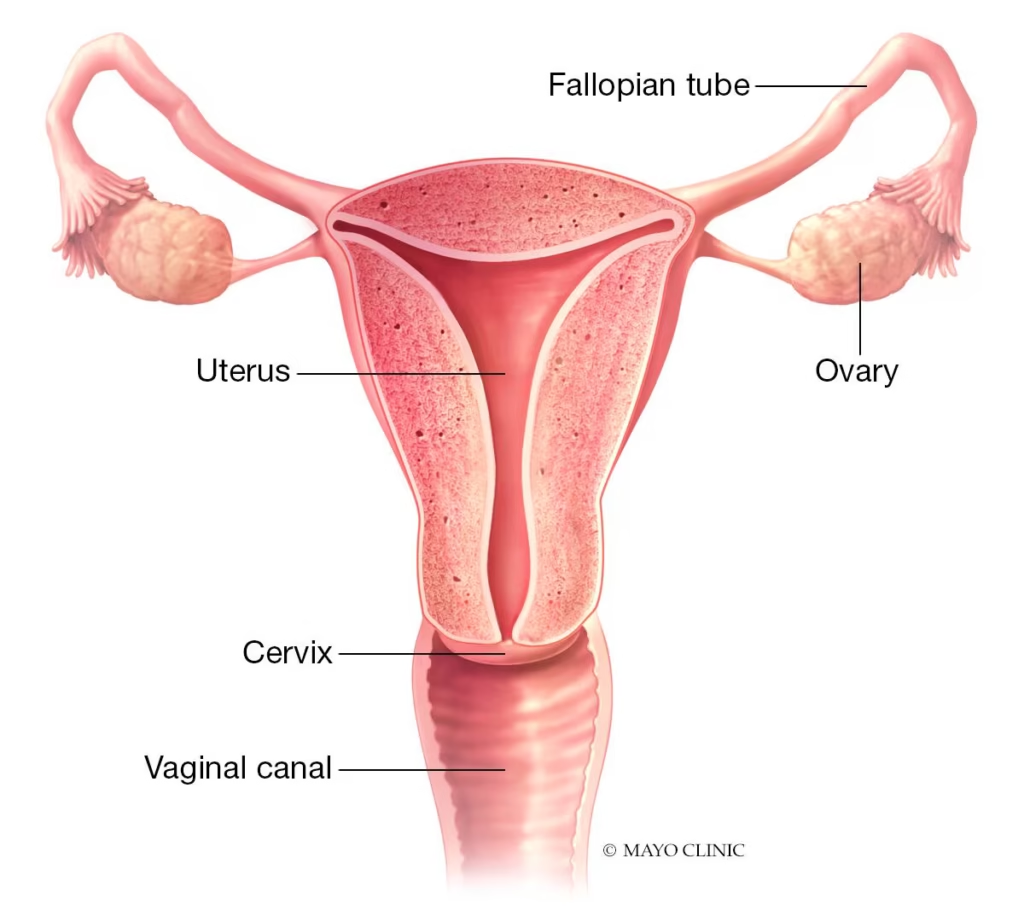
The fallopian tubes are the “highway” where fertilization occurs. If these tubes are blocked or damaged, the sperm cannot reach the egg. Common causes include:
- Pelvic Inflammatory Disease (PID): Often caused by untreated infections.
- Previous Surgeries: Adhesions or scarring from abdominal or pelvic procedures.
- Ectopic Pregnancy: Previous pregnancies that occurred in the tube can cause permanent damage.
3. Endometriosis
Endometriosis occurs when tissue similar to the uterine lining grows outside the uterus. This can cause significant scarring, block fallopian tubes, and create a “toxic” inflammatory environment that impairs both egg quality and embryo implantation.
4. Uterine and Cervical Factors
The uterus must be a receptive environment for a growing fetus. Barriers include:
- Benign Growths: Fibroids or polyps can block the tubes or interfere with the lining.
- Congenital Abnormalities: Anatomical issues present from birth, such as a septate uterus.
- Cervical Mucus Issues: In rare cases, the cervix does not produce the correct type of mucus to help sperm travel.
Key Insights and Practical Guidance
Navigating infertility requires a structured and proactive approach. Modern reproductive medicine emphasizes the following:
- Ovarian Reserve Testing: Tests like Anti-Müllerian Hormone (AMH) help determine the remaining egg supply.
- Lifestyle Optimization: Maintaining a healthy BMI, reducing tobacco and alcohol intake, and managing chronic conditions like diabetes can improve natural fertility.
- Timing Awareness: Utilizing ovulation predictor kits or basal body temperature tracking can help identify the “fertile window” more accurately.
- Semen Analysis: It is important to remember that infertility is a “couple’s issue.” In roughly 40-50% of cases, a male factor is involved, necessitating a parallel evaluation.
When to Seek Medical Help
The American College of Obstetricians and Gynecologists (ACOG) recommends seeking a consultation with a gynaecologist if:
- Age under 35: You have been trying to conceive for 12 months without success.
- Age 35 to 40: You have been trying for 6 months.
- Age over 40: An immediate evaluation is recommended due to the natural decline in egg quality.
- Medical History: You have a history of irregular periods, PCOS, endometriosis, or multiple miscarriages.
3. Visakhapatnam SECTION
People in Visakhapatnam seeking women’s healthcare often consult qualified specialists to investigate the underlying causes of conception delays. Clinics in areas such as Madhurawada, MVP Colony, and Dwaraka Nagar provide access to diagnosis and treatment, including follicular monitoring and tubal patency tests. Facilities like Vedanta Speciality Clinics are among those offering structured care for such conditions, ensuring patients in Vizag receive evidence-based reproductive support.
4. FAQ SECTION
How is female infertility diagnosed?
Diagnosis begins with a clinical history and a physical exam. Specialists typically use blood tests to check hormone levels (FSH, LH, AMH, Progesterone), pelvic ultrasounds to examine the ovaries and uterus, and imaging tests like a Hysterosalpingogram (HSG) to verify if the fallopian tubes are open.
Can stress actually cause infertility in women?
While stress alone is rarely the sole cause of infertility, chronic high stress can disrupt the hypothalamic-pituitary-ovarian axis. This disruption can delay or prevent ovulation, making it difficult to time intercourse correctly. Reducing stress can help restore hormonal balance and improve the overall environment for conception.
Is infertility always a permanent condition?
No, infertility is often a temporary state of “subfertility.” Many causes, such as ovulatory dysfunction or certain uterine polyps, are highly treatable with medication or minor surgery. With the right medical intervention, many women go on to achieve successful, healthy pregnancies.
Can my past use of birth control cause infertility?
There is no clinical evidence that long-term use of hormonal contraceptives causes permanent infertility. Most women return to their natural fertility levels within a few months of stopping the pill. However, birth control can sometimes “mask” underlying issues, like irregular cycles, that become apparent once the medication is stopped.
What is the role of age in female infertility?
Age is a significant biological factor. Women are born with a finite number of eggs, and both the quantity and quality of these eggs decline over time, particularly after the age of 35. This increase in age-related infertility is often due to a higher rate of chromosomal abnormalities in the eggs.
What is the first step if I think I am infertile?
The first step is a consultation with a specialist. Start by tracking your menstrual cycles for 2–3 months to provide data on regularity. A gynaecologist will then recommend baseline tests for both partners to identify any obvious physiological or hormonal barriers to conception.

5. CONCLUSION
In conclusion, female infertility is a multifaceted condition with a wide array of potential causes ranging from hormonal imbalances to structural blockages. While the diagnosis can be emotionally challenging, it is important to remember that medical science has made significant strides in reproductive technology. Identifying the root cause early—whether it is PCOS, tubal factors, or age-related changes—is the most effective way to determine the right path forward. Seeking guidance from an experienced women’s healthcare specialist can help ensure proper diagnosis and personalized care.


Leave a Comment