Table of Contents
Signs of Polycystic Ovaries: 12 PCOS Symptoms Every Woman Should Know
Irregular periods, stubborn acne, sudden weight gain, hair thinning on the scalp but extra hair on the face. Many women in Vizag live with these problems for years without realising they are connected. Together, they are often the signs of polycystic ovaries, a hormonal condition known as Polycystic Ovary Syndrome (PCOS).
PCOS is one of the most common hormonal disorders in women of reproductive age. Studies on Indian women report prevalence anywhere between about 4% and 22%, depending on the population and the diagnostic criteria used, with pooled estimates close to 1 in 10 women. The good news: once identified, PCOS can be managed very well.
In this guide, our gynaecology team at Vedanta Speciality Clinics explains the key signs of polycystic ovaries, how PCOS is diagnosed, and when you should see a gynaecologist.
What Are Polycystic Ovaries and PCOS?
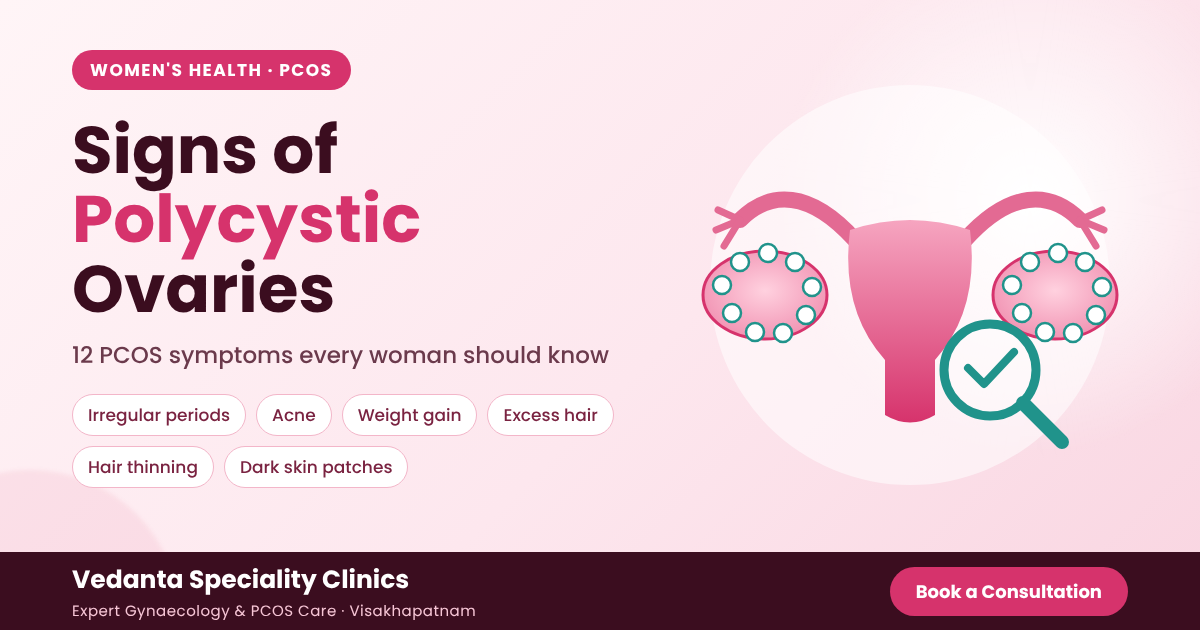
Polycystic ovaries are ovaries that contain many small, fluid-filled follicles (immature eggs) that have not matured or been released properly. On an ultrasound, they can look like a “string of pearls”.
PCOS (Polycystic Ovary Syndrome) is the wider hormonal condition. It involves:
- Irregular or absent ovulation
- Higher levels of male hormones (androgens)
- Often, insulin resistance, which affects weight, skin and long-term metabolic health
An important point: having polycystic-looking ovaries on a scan does not automatically mean you have PCOS, and some women with PCOS have normal-looking ovaries. Diagnosis depends on the full picture of symptoms, blood tests and scan findings.
PCOS vs PCOD: Is There a Difference?
In India, the terms PCOD (Polycystic Ovarian Disease) and PCOS are often used interchangeably. Medically, PCOS is the accepted term and is understood as a syndrome affecting hormones, metabolism, skin and mood, not just the ovaries. Whichever term your doctor uses, the symptoms and the approach to care are largely the same.
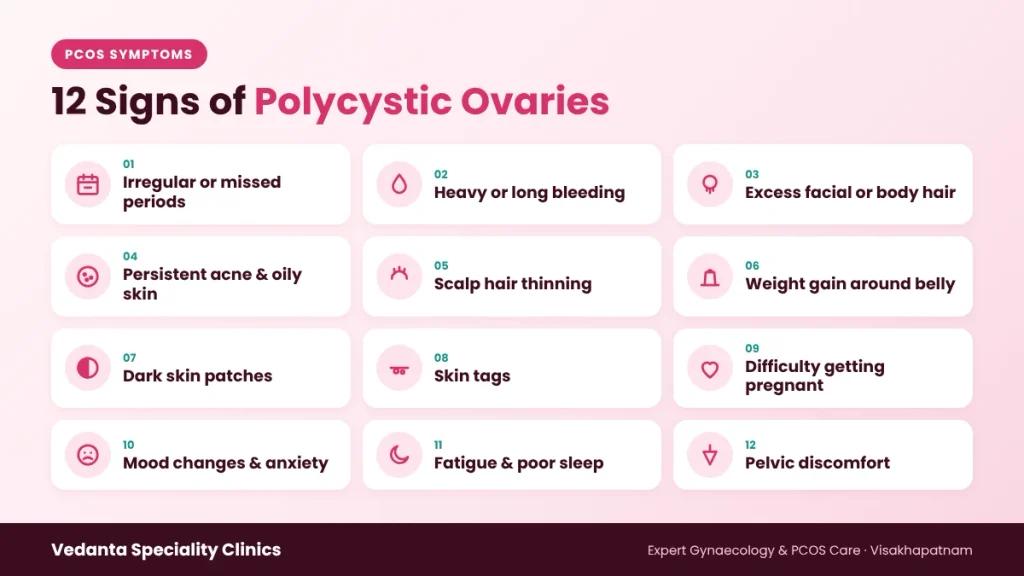
12 Common Signs of Polycystic Ovaries
PCOS looks different in every woman. You may have only two or three of these signs, or several of them.
1. Irregular or Missed Periods
This is the most common sign of polycystic ovaries. Because ovulation does not happen regularly, periods may come:
- Less often than every 35 days
- More often than every 21 days
- Fewer than 8 times a year
- Or stop altogether for months
2. Heavy or Prolonged Bleeding
When periods are delayed, the uterine lining builds up for longer. When the period finally comes, it can be unusually heavy or last longer than normal.
3. Excess Facial and Body Hair (Hirsutism)
Higher androgen levels can cause dark, coarse hair to grow on the upper lip, chin, jawline, chest, abdomen or back. This affects many women with PCOS and is often one of the most distressing symptoms.
4. Persistent Acne and Oily Skin
Acne that continues past the teenage years, or appears on the jawline, chin and upper neck, can be a hormonal sign. It often flares before periods and responds poorly to regular skin treatments.
5. Hair Thinning or Hair Loss on the Scalp
Androgens can also cause female-pattern hair loss, usually seen as thinning at the crown or a widening parting.
6. Weight Gain, Especially Around the Belly
Many women with PCOS gain weight easily and find it hard to lose, particularly around the waist. This is closely linked to insulin resistance. Note that lean women can also have PCOS; normal weight does not rule it out.
7. Dark Patches of Skin (Acanthosis Nigricans)
Velvety, darker patches on the back of the neck, underarms, groin or under the breasts are a visible sign of insulin resistance and are common in PCOS.
8. Skin Tags
Small, soft skin growths around the neck and armpits are also associated with insulin resistance.
9. Difficulty Getting Pregnant
Because ovulation is irregular or absent, PCOS is one of the leading causes of ovulation-related infertility. Many women discover they have PCOS only when they try to conceive. With the right treatment, most women with PCOS can become pregnant.
10. Mood Changes, Anxiety or Low Mood
Women with PCOS have a higher risk of anxiety and depressive symptoms. Hormonal changes, body-image concerns and fertility worries can all contribute. These feelings are real and deserve attention as part of treatment.
11. Fatigue and Poor Sleep
Many women report tiredness and low energy. PCOS is also linked to a higher risk of sleep apnoea, especially when weight is raised.
12. Pelvic Discomfort
Some women experience a dull ache or heaviness in the lower abdomen, although PCOS itself is often painless. Sudden, severe pelvic pain needs urgent medical attention, as it may be due to another cause.
Early Signs of PCOS in Teenagers
Irregular periods are normal in the first year or two after a girl’s periods start, which makes PCOS harder to identify in teenagers. A gynaecologist may suspect PCOS if a teenager has:
- Periods that are still very irregular more than 1 to 3 years after starting
- No period by age 15, or within 3 years of breast development
- Severe acne or noticeable excess hair growth
Ultrasound is generally not used to diagnose PCOS in teenagers within 8 years of their first period, because many healthy young girls naturally have multi-follicular ovaries. Diagnosis in this age group relies on cycle pattern and signs of high androgens.
What Causes Polycystic Ovaries?
The exact cause is not fully known, but several factors work together:
- Insulin resistance: the body needs more insulin to control blood sugar, and high insulin pushes the ovaries to produce more androgens.
- Hormonal imbalance: raised androgens and altered LH (luteinising hormone) levels interfere with ovulation.
- Genetics: PCOS often runs in families. If your mother or sister has PCOS or type 2 diabetes, your risk is higher.
- Lifestyle factors: inactivity, a diet high in refined carbohydrates and weight gain can worsen symptoms, though they do not cause PCOS on their own.
How Is PCOS Diagnosed?
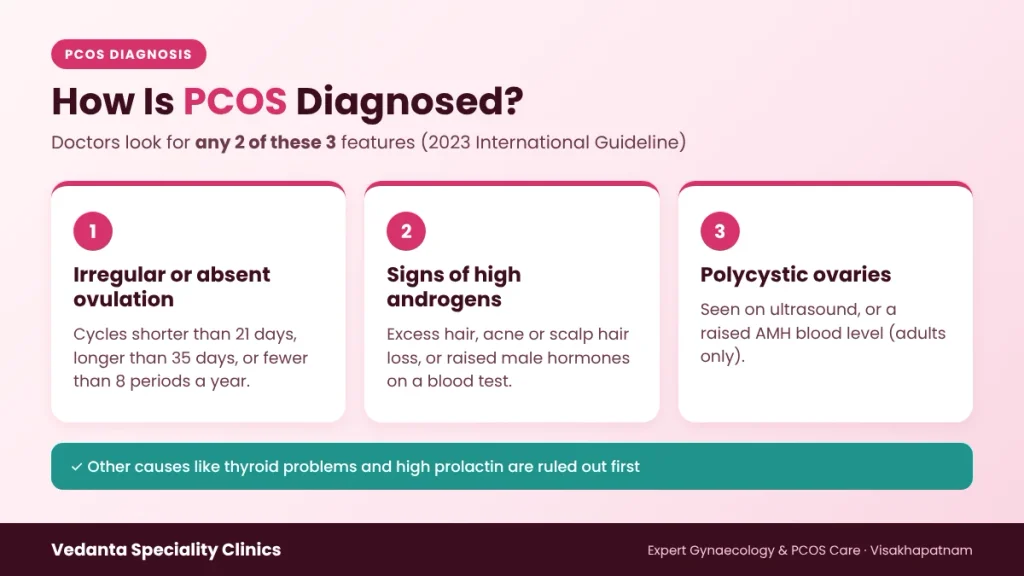
There is no single test for PCOS. Gynaecologists follow the international evidence-based guideline (2023), which builds on the Rotterdam criteria. In adults, PCOS is diagnosed when at least two of these three are present, after other causes are ruled out:
- Irregular or absent ovulation (irregular periods)
- Signs of high androgens: clinical (excess hair, acne, scalp hair loss) or on a blood test
- Polycystic ovaries on ultrasound, or a raised AMH (anti-Müllerian hormone) blood level in adults
Your doctor will also check for conditions that can mimic PCOS, such as thyroid disorders, high prolactin and other adrenal or hormonal problems.
Tests you may be advised:
- Pelvic ultrasound (often transvaginal for clearer images, or abdominal if preferred)
- Hormone tests: testosterone, LH, FSH, AMH, prolactin, TSH
- Blood sugar and insulin tests (fasting glucose, HbA1c or an oral glucose tolerance test)
- Lipid profile
- Blood pressure and BMI / waist measurement
Why You Should Not Ignore the Signs of Polycystic Ovaries
PCOS is more than a period problem. Left unmanaged, it can increase the long-term risk of:
- Type 2 diabetes and pre-diabetes
- High cholesterol and high blood pressure
- Fatty liver disease
- Heart disease
- Thickening of the uterine lining (endometrial hyperplasia) due to infrequent periods
- Complications in pregnancy, such as gestational diabetes
- Anxiety, depression and reduced quality of life
Early diagnosis and regular follow-up significantly reduce these risks.
PCOS Treatment Options
There is no permanent cure for PCOS, but symptoms can be controlled very effectively. Treatment is personalised to your goals, whether that is regular periods, clearer skin, weight management or pregnancy.
1. Lifestyle changes (the foundation of treatment)
- Balanced meals with more fibre, protein and vegetables, and fewer refined carbs and sugary drinks
- At least 150 minutes of moderate exercise per week
- Good sleep and stress management
- Even a 5% to 10% weight loss in women who are overweight can restore ovulation and improve symptoms
2. Medicines (as prescribed by your gynaecologist)
- Hormonal pills to regulate periods and reduce acne and hair growth
- Insulin-sensitising medicines such as metformin, where appropriate
- Anti-androgen medicines for excess hair and acne
- Ovulation-induction medicines for women trying to conceive
3. Fertility support
For women who are planning a pregnancy, options range from ovulation tracking and ovulation induction to advanced fertility treatments when needed.
4. Skin and hair care
Cosmetic treatments such as laser hair reduction and targeted acne treatment can be combined with medical therapy.
Please do not self-medicate or start hormonal pills without a doctor’s advice. The right treatment depends on your age, symptoms, test results and pregnancy plans.
When Should You See a Gynaecologist?
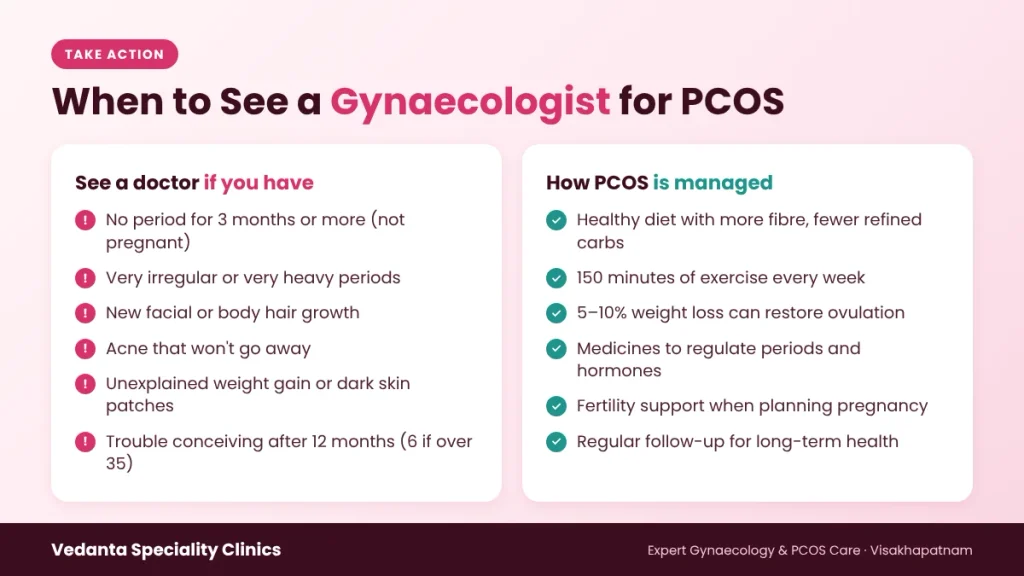
Book a consultation if you notice:
- Periods that are irregular, very heavy, or missing for 3 months or more (and you are not pregnant)
- New or increasing facial or body hair
- Acne that does not improve with regular treatment
- Unexplained weight gain or dark skin patches
- Difficulty getting pregnant after 12 months of trying (or 6 months if you are over 35)
PCOS Treatment in Vizag at Vedanta Speciality Clinics
At Vedanta Speciality Clinics, our experienced gynaecologists in Vizag offer complete, compassionate care for PCOS under one roof:
- Detailed consultation and accurate PCOS diagnosis
- In-clinic ultrasound and hormone testing [confirm availability]
- Personalised treatment plans for periods, skin, weight and metabolic health
- Fertility guidance and support for women planning pregnancy
- Diet and lifestyle counselling
- Long-term follow-up to protect your future health
Whether you are a teenager with irregular periods or a woman planning to start a family, our team listens, explains every step clearly and treats you with privacy and respect.
Book your consultation today 📍 [Clinic address, Visakhapatnam] 📞 [Phone number] 🌐 [Booking page link]
Frequently Asked Questions About Polycystic Ovaries
What are the first signs of polycystic ovaries? The earliest signs are usually irregular or missed periods, acne that does not go away, and new hair growth on the face or body. Weight gain around the waist is also common.
Can I have PCOS if my periods are regular? Yes. Some women have regular cycles but still have high androgen levels and polycystic ovaries on ultrasound, which is enough for a diagnosis.
Can a thin woman have PCOS? Yes. Lean PCOS is common, particularly in Indian women. Weight is not part of the diagnostic criteria.
Is PCOS curable? PCOS cannot be permanently cured, but it can be controlled very well with lifestyle changes and medical treatment, and many women become symptom-free.
Can I get pregnant with PCOS? Yes. Most women with PCOS can conceive, either naturally after lifestyle changes or with fertility treatment guided by a gynaecologist.
Do polycystic ovaries cause pain? PCOS is usually painless. Some women feel mild pelvic discomfort, but sudden or severe pain should be checked by a doctor immediately.
Which doctor should I consult for PCOS in Vizag? A gynaecologist is the right first specialist. At Vedanta Speciality Clinics, our gynaecology team diagnoses and manages PCOS, and coordinates with other specialists when needed.
Conclusion
The signs of polycystic ovaries can be easy to dismiss as “just irregular periods” or “bad skin”, but together they point to a hormonal condition that deserves proper care. Recognising them early helps protect your fertility, your metabolic health and your peace of mind.
If you recognise any of these symptoms, speak to a gynaecologist. Book an appointment with Vedanta Speciality Clinics, Vizag, and take the first step towards a healthier, more balanced you.
Disclaimer: This article is for general awareness only and is not a substitute for professional medical advice. Please consult a qualified gynaecologist for diagnosis and treatment.