

Table of Contents
From Question Marks to Clarity: How Do I Confirm My Pregnancy?
Seeing a late period on your calendar—or noticing subtle shifts like tender breasts, sudden tiredness, or unexpected queasiness—can fill your heart with a rush of excitement, anticipation, and nervous energy. Whether you have been actively planning a baby for months or were caught pleasantly by surprise, waiting for a clear answer feels deeply emotional.
If you are wondering, how do I confirm my pregnancy, knowing the exact steps from home screening to clinical verification takes the guesswork out of those early days. Confirming a pregnancy reliably involves a three-step progression: an initial home urine test, a quantitative blood test when needed, and a medical viability ultrasound to ensure everything is developing safely right from the start.

What Is Medical Pregnancy Confirmation?
Medical pregnancy confirmation is the clinical process of verifying conception and healthy early implantation through three progressive steps: detecting human chorionic gonadotropin (hCG) via a first-morning urine test, measuring exact hormone doubling rates with a serum beta-hCG blood test, and visualizing an intrauterine gestational sac via pelvic ultrasound.
How Common Are Early Testing Questions Among Indian Women?
Navigating early pregnancy confirmation comes with unique practical considerations for women across India:
- Widespread Access to Home Kits: Over-the-counter urine pregnancy test (UPT) cards are widely available across pharmacies in Visakhapatnam and throughout India, offering over 97% to 99% accuracy when used correctly after a missed period.
- Impact of Irregular Cycles and PCOS: According to clinical guidelines from the Federation of Obstetric & Gynaecological Societies of India (FOGSI), Polycystic Ovary Syndrome (PCOS) affects roughly 1 in 5 Indian women of reproductive age. Because unpredictable cycles make it harder to know exactly when a period is “late,” many women require blood tests or ultrasounds to pinpoint gestational age accurately.
- Preventing Early Uncertainty: World Health Organization (WHO) and American College of Obstetricians and Gynecologists (ACOG) guidelines emphasize early clinical confirmation not merely to verify a positive result, but to confirm that the pregnancy is safely located inside the uterus and to begin essential folic acid support immediately.
- Normalizing Faint Lines and Retests: Testing a few days too early is one of the most common reasons women experience confusing faint lines or false negatives, making proper timing key to calm reassurance.
3 Ways to Confirm Pregnancy
| Confirmation Method | When to Do It | What It Shows |
|---|---|---|
| 1. Home Urine Pregnancy Test (UPT) | From the first day of a missed period. First-morning urine can improve accuracy. | Detects the pregnancy hormone (hCG) in urine and gives a positive or negative result. |
| 2. Beta-hCG Blood Test | After pregnancy is suspected or a home test is positive. | Measures the exact level of hCG hormone in the blood. Repeat testing may be advised to check changes over time. |
| 3. Early Pregnancy Ultrasound | Usually around 6–7 weeks from the first day of the last menstrual period (LMP). | Helps confirm the pregnancy location, gestational sac, and embryo’s development. Heartbeat may also be visible. |
Early Signs That Prompt You to Test for Pregnancy
Before picking up a test kit, your body often sends gentle hormonal signals suggesting it is time to check. You may notice:
- A Missed Menstrual Period: Your expected period date passes without your usual menstrual flow arriving.
- Heightened Breast Tenderness or Fullness: Breasts feel unusually sensitive, heavy, or tingly due to surging estrogen and progesterone.
- Sudden, Deep Fatigue: Feeling overwhelmingly sleepy during the afternoon even after getting a full night’s rest.
- Light Implantation Spotting: A few drops of light pink or brownish discharge occurring 6 to 12 days after ovulation, without heavy bleeding or clots.
- Mild Queasiness or Smell Sensitivity: Sudden sensitivity to everyday kitchen aromas like tempering spices (tadka), garlic, or morning coffee.
- Increased Urinary Frequency: Needing to visit the washroom more often as pelvic blood flow increases.
Why Timing Matters: The Biology Behind Pregnancy Tests
Understanding how pregnancy hormones build up explains why testing too early can produce misleading results:
1.1. Embryonic Implantation Begins: Days 6 to 12 post-ovulation.
Once a fertilized egg attaches to the uterine wall, the developing placenta starts secreting human chorionic gonadotropin (hCG) into your bloodstream.
2.2. Rapid hCG Doubling Phase: Every 48 to 72 hours.
In a healthy early pregnancy, hCG levels double approximately every two days. Blood levels rise first, followed several days later by detectable levels in your urine.
3.3. Urine Threshold Reached: Around Day 14 post-ovulation.
By the day your period is due, urine hCG concentrations typically cross the sensitivity threshold (usually 20–25 mIU/mL) required to turn a home test line clearly positive.
4.4. Ultrasound Visibility Milestone: Weeks 6 to 7 of gestation.
Once hCG levels exceed 1,500–2,000 mIU/mL and gestation reaches week 6, a high-resolution ultrasound can visualize the tiny gestational sac and heartbeat.
How to Confirm Your Pregnancy: Step-by-Step Guide
Following a clear, sequential process eliminates confusion and ensures reliable answers:
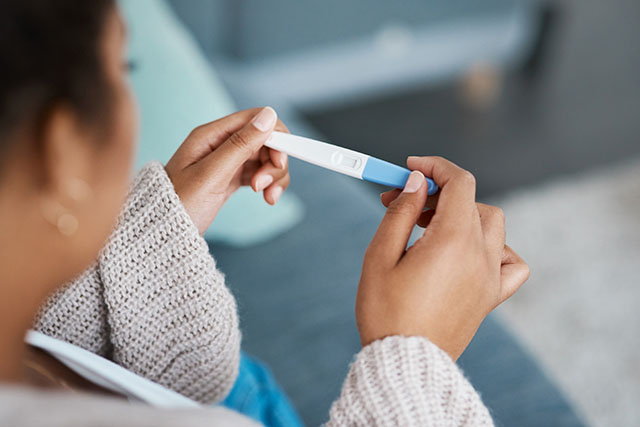
- Step 1: Choose the Right Day for a Home Urine Test: Wait until the morning after your missed period. If your cycles are irregular, wait at least 14 to 16 days after unprotected intercourse.
- Step 2: Collect First Morning Urine: Use a clean, dry container upon waking, as overnight urine holds the highest concentration of hCG.
- Step 3: Follow Kit Instructions Carefully: Place the exact recommended drops (usually 2–3 drops) into the sample well and read the result within the specified 3-to-5-minute window—avoid reading the strip hours later, as evaporation lines can appear.
- Step 4: Interpret the Lines Calmly: Two distinct lines (even if the test line is lighter than the control line) indicate a positive result. If the line is very faint, repeat the test 48 hours later.
- Step 5: Book a Clinical Consultation & Blood Test: Schedule a visit with a gynaecologist to confirm your result with a serum beta-hCG test (if clinically needed) and initiate prenatal supplements.
- Step 6: Complete Your Early Viability Ultrasound: Between weeks 6 and 7, undergo a painless pelvic scan to confirm intrauterine placement, accurate due date, and fetal heart activity.
What Happens During Your Pregnancy Confirmation Visit?
Stepping into a clinic after seeing two pink lines is an exciting milestone. A reassuring first appointment typically includes:
- Reviewing Your Last Menstrual Period (LMP): Calculating your estimated due date (EDD) and current gestational week.
- Confirming Safe Intrauterine Placement: Ensuring the pregnancy is growing comfortably inside the uterus rather than outside (ruling out an ectopic pregnancy).
- Baseline Maternal Health Screening: Ordering routine first-trimester blood checks—including Complete Blood Count (CBC) for hemoglobin, blood group and Rh factor, thyroid profile (TSH), and fasting blood sugar.
- Starting Essential Prenatal Supplements: Recommending daily folic acid (400 mcg to 5 mg based on your health profile) and reviewing safe nutrition and lifestyle habits.
When Should You See a Doctor?
Once you see a positive home test—or if your period is more than a week late despite negative home results—connecting with a healthcare professional gives you peace of mind. You should also seek prompt medical evaluation if you experience:
- Vaginal bleeding or heavy spotting accompanied by lower abdominal cramping after a positive test.
- Sharp, persistent pain localized on one side of your lower pelvis.
- Severe dizziness, lightheadedness, or shoulder-tip discomfort.
- Persistent nausea and vomiting that prevent you from keeping water or light meals down.
If you are asking yourself how do I confirm my pregnancy or have recently seen a positive home test, speaking with a qualified gynaecologist is the most reassuring next step. Dr. Devani Chalamuri at Vedanta Speciality Clinics in Madhurawada, Vizag specialises in early pregnancy confirmation, viability ultrasound assessments, and offers compassionate, evidence-based maternity care for women across Visakhapatnam.

When Should I See a Gynecologist in Vizag?
You should schedule an appointment with an experienced lady gynecologist Visakhapatnam as soon as you receive a positive home pregnancy test, or if your period is delayed by more than 7 to 10 days with negative home kits. Prompt guidance clarifies your hormonal status and ensures you begin protective prenatal vitamins right away.
How Early Should I Start Prenatal Care in Visakhapatnam?
Clinical guidelines recommend starting official prenatal care between weeks 5 and 8 of pregnancy. Partnering early with a trusted obstetrician in Vizag allows your doctor to confirm fetal viability, screen for baseline anemia or thyroid shifts, and map out your first-trimester scan schedule smoothly.
Frequently Asked Questions
How do I confirm my pregnancy accurately at home?
You can confirm pregnancy at home using an over-the-counter urine pregnancy test kit on or after the first day of your missed period. Using your first morning urine provides the highest concentration of hCG hormone for clear, accurate results.
Why did I get a faint second line on my home pregnancy test?
A faint second line usually indicates early pregnancy where hCG hormone levels are present but still rising. Retesting in 48 hours with first morning urine or scheduling a quantitative serum beta-hCG blood test confirms progression.
When is the best time to get an early pregnancy ultrasound scan?
An early viability ultrasound is typically scheduled between 6 and 7 weeks after your last menstrual period. Scanning too early (before week 5) may not yet show the gestational sac or fetal heartbeat clearly.
Can I confirm pregnancy reliably if I have PCOS or irregular periods?
Yes, if you have irregular cycles due to PCOS or thyroid variations, waiting 2 to 3 weeks after suspected conception—or asking your doctor for a serum beta-hCG blood test—provides reliable confirmation even without a predictable missed period date.
Which doctor should I see to confirm my pregnancy in Vizag?
You should consult an experienced pregnancy doctor Visakhapatnam, such as Dr. Devani Chalamuri at Vedanta Speciality Clinics in Madhurawada, for accurate beta-hCG confirmation, early viability ultrasounds, and personalized prenatal guidance.
How early should I start prenatal care in Visakhapatnam once my test is positive?
Once you confirm a positive test, booking your initial prenatal consultation between weeks 5 and 8 with a women’s health specialist ensures your doctor can verify intrauterine pregnancy location, prescribe folic acid, and check baseline blood health.
Can a home pregnancy test give a false negative result?
Yes, testing too early before implantation is complete, using diluted afternoon urine, or reading an expired test kit can cause a false negative. Repeating the test after 2 to 3 days or getting a blood test resolves uncertainty.
Where can women get early pregnancy scans and blood tests in Madhurawada?
Women in Madhurawada and northern Visakhapatnam can access complete early pregnancy confirmation panels, quantitative beta-hCG testing, and viability ultrasounds at Vedanta Speciality Clinics.
Begin Your Motherhood Journey with Clear Reassurance
Knowing how do I confirm my pregnancy turns an anxious waiting period into an organized, joyful step forward. By combining well-timed home testing with supportive clinical verification, you give both yourself and your growing baby the healthiest possible start.
If you are experiencing early pregnancy signs or wish to medically confirm your positive test, Dr. Devani Chalamuri at Vedanta Speciality Clinics, Madhurawada, Vizag is available for a consultation — https://vedantaspecialityclinics.com/. Reach out today to book your visit and step into motherhood with confidence and compassionate care.